


PLICHT EN GENDER IN DE REGENCY TIJD


“Dearest gentle reader, did you miss me?” Iets meer dan een jaar geleden schreef ik voor Jonge Historici over het verrukkelijke recept dat van Bridgerton de populairste Netflix-serie aller tijden maakte. Geplaagd door lockdowns bleven miljoenen kijkers wereldwijd voor de buis hangen voor de bont gekleurde kostuums en de zwaar geseksualiseerde historische setting van de Bridgertonwereld. Uw historica spotte gelukkig ook nog interessante genderhistorische thema’s te midden van het festijn dat ook wel Regency fantasy, Fifty Shades of Grey meets Gossip Girl en softporn on demand werd genoemd. Oké, misschien was ze niet helemaal immuun voor het escapisme dat Bridgerton te bieden had. Zeker gezien er door de voortdurende pandemie niet veel anders te doen was dan de serie zeventien keer opnieuw te kijken. Dus ja, Lady Whistledown, ook ik heb u gemist.
Anthony
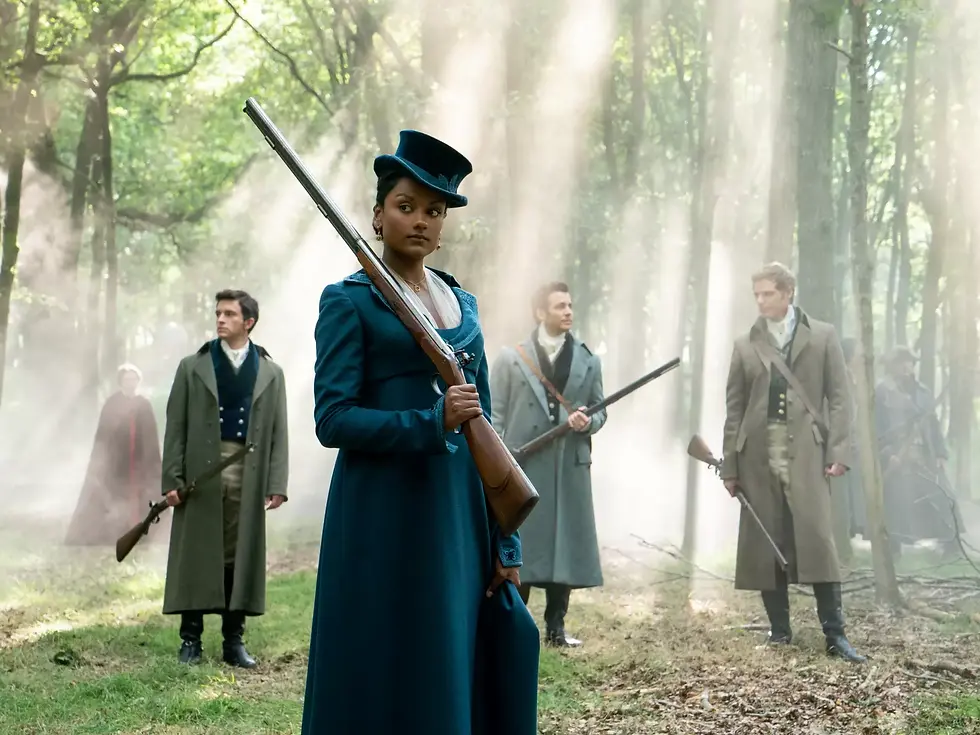
Na het grandioze society huwelijk van Daphne Bridgerton (Phoebe Dynevor), is het nu de beurt aan de oudste telg Anthony (Jonathan Bailey) om in de echt te treden. Maar met wie? De knappe viscount die hij is verdient toch niemand minder dan de door de koningin (Golda Rosheuvel) aangewezen diamant van het seizoen? Dit jaar is dat de jonge Edwina Sharma (Charithra Chandran), die recentelijk met haar oudere zus Kate (Simone Ashley) en moeder Mary (Shelley Conn) uit India is teruggekeerd. Kate vindt Anthony van het begin af aan niet goed genoeg voor haar jonge zusje, die zij plichtsgetrouw heeft opgeleid tot een échte vrouw van le bon ton. Anthony probeert daarom vooral haar goedkeuring te winnen, terwijl Kate niet van plan is te wijken van haar originele standpunt. Uiteraard verlopen hun plannen weer niet helemaal zoals ze hadden voorzien.

Vanaf het begin van de eerste aflevering wanen we ons door het fenomenale werk van de acteurs, set- en kostuumontwerpers weer in de bekende wereld van Bridgerton. Het is net alsof we er nooit zijn weggeweest. In het narratief is wel een belangrijke verandering te bemerken, wat komt door de wisseling van de wacht. Waar het vorige seizoen een vrouwelijk hoofdpersonage had, is die in de nieuwe afleveringen mannelijk. Dat gegeven biedt nieuwe perspectieven op de genderrelaties van de vroege 19de eeuw. En die zijn allerminst oninteressant.
Daphnes verhaal over de huwelijksmarkt onthulde historisch accurate feiten over het gebrek aan bewegingsvrijheid voor vrouwen van haar tijd, zeker in vergelijking met mannen. Maar het belangrijkste motief in Anthony’s zoektocht naar een geschikte partner toont dat mannen in zijn positie ook niet helemaal zonder hun specifieke beperkingen leefden. Anthony is namelijk een viscount en hoofd van een vooraanstaande adellijke familie. Bij zo een positie kwamen aanzienlijke verplichtingen kijken, waaronder het aangaan van een financieel en dynastiek voordelig huwelijk. Anthony is zich volkomen bewust van het feit dat het de regel is dat de echtelieden uit zijn sociale klasse niet uit liefde trouwen. Zijn zoektocht naar een bruid onderneemt hij dan ook uit plichtsgevoel. Net als vele anderen is hij daarbij bereid om liefde uit het spel te laten, zelfs wanneer hij gevoelens ontwikkelt voor een ander. Bij ongelukkige huwelijken uit het verleden neigen we ons te richten op de arme vrouwen die aan het korte einde trokken. Daar zijn natuurlijk terechte redenen voor. Maar we vergeten weleens dat ook mannen tekort werden gedaan door de ongeschreven sociale regels van hun tijd. Anthony’s verhaal, hoewel fictief, is daar tóch een herinnering aan.
Mejuffrouw Eloise, Madame Delacroix en Lady Whistledown
Maar er was nog meer om als vrouwenhistorica blij van te worden. Bovenal dat de naam van de eerste feminist van de moderne tijd werd genoemd! Een aantal vrouwelijke personages hebben het met elkaar over Mary Wollstonecraft (1759-1797), de schrijfster van een pamflet over de bevordering van gelijke rechten voor vrouwen. Haar boodschap vinden we terug in het narratief van Lady Whistledown (stem van Julie Andrews), wiens identiteit voor de kijkers al in het vorige seizoen werd onthuld. De roddelschrijfster moet door haar drukke schema een samenwerking aangaan met modiste van de ton, Madame Delacroix (Kathryn Drysdale). Hun onderonsjes benadrukken hun uitzonderlijke positie in de Regency-maatschappij: ze zijn twee werkende vrouwen, die in een mannenwereld een eigen zaak hebben weten op te richten waar ze financieel onafhankelijk mee zijn geworden.
Maar ook in dit seizoen is het vooral Eloise Bridgerton (Claudia Jessie) die de belichaming vormt van de vrijgevochten vrouw die Wollstonecraft meer had willen zien. In het vorige seizoen gaf ze aan haar oudere broer Benedict (Luke Thompson) meer dan eens te kennen dat ze dezelfde mogelijkheden wilde hebben als hij tot zijn beschikking had. Nu heeft ze net als haar zus Daphne haar intrede gedaan in de Londense society, maar wel op haar termen. Wanneer ze op een bal danst met een man die haar alleen uit hetzelfde plichtsgevoel als haar broer Anthony gevraagd heeft, wijst ze hem er even heel duidelijk op dat ze meer is dan slechts een trofeebruid. Het is haar hilarische optreden die de kijker eraan herinnert, dat het niet alles goud is wat er blinkt in de droomachtige Regencywereld van Bridgerton. Zeker niet als je een vrouw bent.
Benedict
Wat deze nieuwe serie daarmee laat zien, is dat de makers (nog) zoveel kunnen doen met gendergeschiedenis. En het materiaal dat zij produceren blijft zowel vermakelijk als interessant tegelijk. Het nieuwe seizoen is nog maar net uit - al zullen velen de hele serie vorig weekend van voren naar achteren hebben gebinged – dus we moeten nog even wachten op het vervolg. Dan zal Benedict, de tweede Bridgerton zoon, centraal staan. In het eerste seizoen probeerde hij zijn eigen weg te vinden, tot hij in het tweede seizoen ontdekte hoe onlosmakelijk hij is verbonden met zijn familienaam. Wat voor genderhistorische lessen zullen zijn verhaal over liefdesgeluk naar voren brengen? Lady Whistledown, hoe lang moeten we nog wachten?
Het tweede seizoen van 'Bridgerton' is nu te zien op Netflix.

Jasmijn Groot is genderhistorica. Ze publiceert artikelen voor onder andere Opzij en Winq en stelt haar expertise ter beschikking aan verschillende multimedia. Jasmijn studeerde Geschiedenis en Oudheidkunde aan de Universiteit van Amsterdam en de Vrije Universiteit.
- ENGLISH BELOW -
“Dearest gentle reader, did you miss me?” A little over a year ago, I wrote for Jonge Historici about the delightful recipe that made Bridgerton the most popular Netflix series of all time. Plagued by lockdowns, millions of viewers worldwide remained glued to their screens for the brightly coloured costumes and the heavily sexualised historical setting of the Bridgerton world. Your historian, fortunately, also spotted interesting gender-historical themes amid the spectacle that has been described as Regency fantasy, Fifty Shades of Grey meets Gossip Girl, and on-demand soft porn. Okay, perhaps she was not entirely immune to the escapism that Bridgerton had to offer—especially given that, during the ongoing pandemic, there was not much else to do than rewatch the series seventeen times. So yes, Lady Whistledown, I have missed you too.
Anthony
After the grand society wedding of Daphne Bridgerton (Phoebe Dynevor), it is now the turn of the eldest child, Anthony (Jonathan Bailey), to marry. But to whom? Surely the handsome viscount that he is deserves nothing less than the Queen’s (Golda Rosheuvel) chosen diamond of the season? This year, that is the young Edwina Sharma (Charithra Chandran), who has recently returned from India with her older sister Kate (Simone Ashley) and their mother Mary (Shelley Conn). From the very beginning, Kate finds Anthony unworthy of her younger sister, whom she has dutifully trained into a true woman of le bon ton. Anthony therefore mainly tries to win her approval, while Kate has no intention of changing her original stance. Naturally, their plans do not unfold quite as they had expected.
From the very beginning of the first episode, thanks to the phenomenal work of the actors, set designers, and costume designers, we are once again transported into the familiar world of Bridgerton. It feels as though we have never been away. Within the narrative, however, a significant change can be observed, resulting from a shift in focus. Whereas the previous season had a female protagonist, the new episodes centre on a male one. This offers new perspectives on gender relations in the early nineteenth century—and these are by no means uninteresting.
Daphne’s story of the marriage market revealed historically accurate insights into the limited freedom of movement for women of her time, especially compared to men. Yet the central motif in Anthony’s search for a suitable partner shows that men in his position were also constrained by their own specific limitations. Anthony is a viscount and head of a prominent aristocratic family. Such a position came with significant obligations, including entering into a financially and dynastically advantageous marriage. He is fully aware that, within his social class, marriages are not made for love. He therefore undertakes his search for a bride out of duty. Like many others, he is willing to exclude love from the equation—even when he develops feelings for someone else. In discussions of unhappy historical marriages, attention is often focused on the women who drew the short straw, and for good reason. But we sometimes forget that men, too, were constrained by the unwritten social rules of their time. Anthony’s story, though fictional, serves as a reminder of this.
Miss Eloise, Madame Delacroix and Lady Whistledown
But there was more to delight a women’s historian. Above all, the name of the first feminist of the modern era is mentioned! Several female characters discuss Mary Wollstonecraft (1759–1797), the author of a pamphlet advocating equal rights for women. Her message is reflected in the narrative of Lady Whistledown (voiced by Julie Andrews), whose identity was already revealed to viewers in the previous season. The gossip writer must, due to her busy schedule, collaborate with the ton’s modiste, Madame Delacroix (Kathryn Drysdale). Their exchanges highlight their exceptional position within Regency society: they are two working women who have managed to build their own businesses in a male-dominated world, achieving financial independence.
But in this season, it is especially Eloise Bridgerton (Claudia Jessie) who embodies the emancipated woman Wollstonecraft would have wanted to see more of. In the previous season, she repeatedly told her older brother Benedict (Luke Thompson) that she wanted the same opportunities he had. Now, like her sister Daphne, she has entered London society—but on her own terms. When she dances at a ball with a man who has only asked her out of the same sense of duty as her brother Anthony, she makes it very clear that she is more than just a trophy bride. Her hilarious performance reminds the viewer that not everything that glitters in the dreamy Regency world of Bridgerton is gold—especially not if you are a woman.
Benedict
What this new season shows is that the creators still have so much they can do with gender history. And the material they produce remains both entertaining and intellectually engaging. The new season has only just been released—though many will have already binge-watched it over the weekend—so we will have to wait for what comes next. Benedict, the second Bridgerton son, will then take centre stage. In the first season, he was searching for his own path; in the second, he discovered how inextricably he is tied to his family name. What gender-historical lessons will his story of romantic fulfilment bring? Lady Whistledown, how long must we wait?
Bridgerton season 2 is now available on Netflix.
Jasmijn Groot is a gender historian. She publishes articles for, among others, Opzij and Winq, and offers her expertise to various multimedia platforms. Jasmijn studied History and Classical Studies at the University of Amsterdam and the VU University.


Opmerkingen