


RUTH HANDLER

DE VROUW ACHTER BARBIE ÉN DE NEARLY ME BORSTPROTHESEN
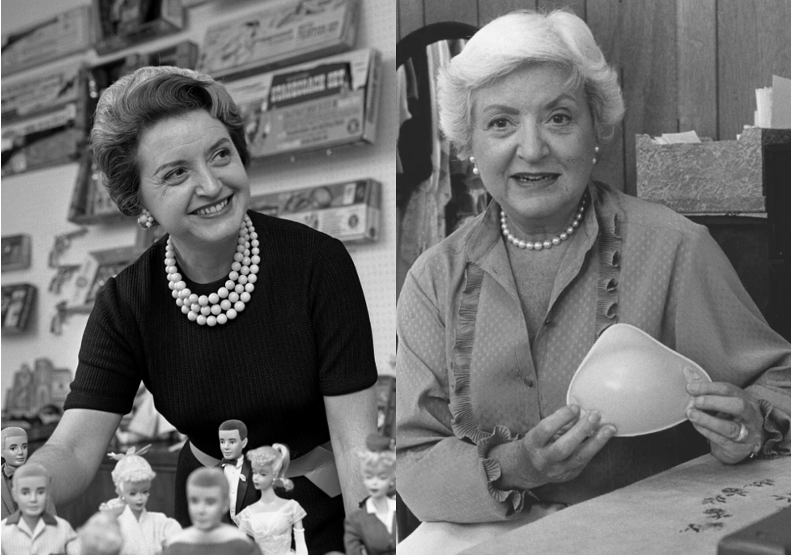
Ruth Handler wordt tegenwoordig door velen voornamelijk geassocieerd met Barbie. Als zakenvrouw en bedenker van de wereldberoemde pop speelde zij een belangrijke rol in het doorbreken van traditionele ideeën over de positie van vrouwen in de samenleving. Ze creëerde een volwassen pop met borsten die talloze carrièremogelijkheden had en meisjes liet dromen van een toekomst buiten de toen geldende genderrollen. Maar Barbie was niet Ruths enige creatie die het leven van vrouwen veranderde. Nadat Ruth zelf een mastectomie had ondergaan, besloot zij borstprothesen te ontwerpen—een markt die destijds nog nauwelijks ontwikkeld was. Ze creëerde de Nearly Me borstprothesen waarmee Ruth veel vrouwen hielp hun zelfvertrouwen terug te vinden na het ondergaan van zo’n ingrijpende operatie. Op deze manier liet Ruth Handler een groot nalatenschap achter voor vrouwen wereldwijd. Maar hoe kwam zij op deze vernieuwende ideeën en op welke manieren hebben haar ontwerpen de levens van zoveel vrouwen beïnvloed?
Ruth Handler werd geboren als Ruth Marianna Mosko in 1916 in Denver, Colorado, in de Verenigde Staten, waarnaartoe haar ouders waren geëmigreerd vanuit Polen om te ontsnappen aan de dienstplicht en het antisemitisme. Ze groeide op als jongste van tien kinderen. Het gezin hechtte veel waarde aan ondernemerschap en creativiteit en ook was het voor hen normaal dat vrouwen buitenshuis werkten.
In 1932 werd Ruth verliefd op een arme kunststudent genaamd Isadore Elliot Handler (‘Izzy’). Tijdens haar tweede jaar aan de Universiteit van Denver ging Ruth op vakantie naar Los Angeles waar ze een baan kreeg bij Paramount Studios. Izzy verhuisde niet lang daarna naar dezelfde stad. Aangezien Izzy zowel niet veel geld als geen goed netwerk had, waren Ruths ouders bang dat ze zouden trouwen. Maar Ruth trok zich niets aan van andermans mening. Ze vroeg Izzy ten huwelijk, waarna ze trouwden in 1938 in Denver—met goedkeuring van Ruths familie. Ze keerden terug naar Californië en Ruth stelde voor om de naam Izzy te veranderen naar zijn tweede naam Elliot. Ze kregen twee kinderen: Barbara en Kenneth.
Samen met zakenpartner Harold ‘Matt’ Matson richtten Ruth en Elliot het bedrijf Mattel op in 1945. De naam was een samensmelting van de namen van de twee mannen. De eerste producten die Mattel fabriceerden waren fotolijsten en ook al was deze productie Ruths idee, is het nooit bij ze opgekomen om haar naam ook in de bedrijfsnaam te verwerken. Later produceerde Mattel ook poppenhuismeubilair dat gemaakt werd uit de resten van de fotolijsten en werd de productie uitgebreid naar ander speelgoed zoals de Uke-A-Doodle, een speelgoedukelele. Maar de speelgoedindustrie veranderde pas echt door de productie van Barbie.
Toen de Tweede Wereldoorlog tot zijn einde kwam, werden vrouwen geacht zich terug te trekken uit het werkleven en zich weer te richten op het huishouden en de kinderen; de stereotype ‘vrouw’ moest weer zichtbaar worden. Ruth keek al jaren toe hoe haar dochter Barbara en haar vriendinnen speelden met papieren poppen en was gefascineerd door de manier waarop zij zichzelf projecteerden op de poppen als volwassen vrouwen. Sindsdien was Ruth vastberaden om een alternatief te verzinnen voor deze papieren poppen. Ze bedacht een volwassen pop met borsten als onafhankelijk individu die niet de rol van moeder of huisvrouw moest vervullen, maar alles kon worden waar ze naar verlangde. Zo konden meisjes tussen de vijf en twaalf jaar dromen van het volwassen leven met behulp van de pop.
Ze stelde het idee voor aan Elliot en de ontwerpers bij Mattel (van wie de meerderheid man was), maar niemand zag het zitten. Hoewel Ruth dacht dat de mannen doodsbenauwd werden van het idee van een pop met borsten, zeiden ze dat een vrouwelijke pop met gelakte nagels, leuke kleren met ritsen, figuurnaden en zomen niet uitvoerbaar was voor een betaalbare prijs. En zo zag Ruth uiteindelijk af van het idee van een volwassen vrouwelijke pop. Tot een vakantie in Zwitserland.
Toen het gezin Handler in 1956 op rondreis was in Europa, liepen ze in Luzern, Zwitserland, langs een speelgoedwinkel. In de etalage stond een vrouwelijke pop van ongeveer 30 centimeter lang genaamd Bild Lilli. Ze was gebaseerd op het stripfiguur Lilli uit de conservatieve West-Duitse krant Bild. De pop zat op een schommel en was gekleed in Europese stijl skikleding, had een platina paardenstaart, zwarte eyeliner en rood gestifte lippen. Naast haar stonden nog zes of zeven dezelfde poppen, maar elk gekleed in een andere skioutfit. Ruths dochter Barbara wilde dolgraag zo’n pop hebben, maar kon niet kiezen uit de vele outfits. Daarom vroeg Ruth aan de winkelmedewerkster of ze de outfits kon combineren. Dit was niet mogelijk: ‘Nee, als je die outfit wil, koop je die pop; als je deze outfit wil, koop je deze pop.’ En precies dit moment gaf Ruth weer het vertrouwen om verder te gaan met haar eerdere idee.
Ruth nam de Bild Lilli poppen mee naar huis en gebruikte ze als studiemateriaal. Ze onderzocht de bijzonderheden van het volwassen postuur en wilde graag het concept van wisselbare kleding overnemen. Deze marketingtruc was vergelijkbaar met de scheermesjes van Gillette: een goedkope houder met dure scheermesjes. Want zoals de houder niets was zonder scheermesjes, was de pop ook niets zonder kleding.
Het ontwerp en de productie van de pop vonden niet plaats in de Verenigde Staten, maar in Japan. De Japanse yen was minder waard en daardoor was de productie goedkoop. Charlotte Johnson werd Barbies eerste officiële kledingontwerper en samen met Japanse naaister Fumiko Miyatsuka dachten ze na over de ontwerpen en stoffen, zonder het spreken van dezelfde taal. Aangezien de borsten van de pop erg groot waren in vergelijking met de grootte van haar lichaam, was het ontwerpen van Barbiekleding een uitdaging; niets wat ze tekenden paste op de pop.
"Kleine meisjes willen gewoon grotere meisjes zijn." - Ruth Handler
Barbie, genoemd naar Ruth en Elliots dochter Barbara, deed haar intrede op 9 maart 1959 tijdens de American International Toy Fair in New York. Ze heeft een karakteristieke blonde paardenstaart, rode lippen, gebogen wenkbrauwen en draagt een zwart-wit gestreept badpak. Haar voeten staan altijd omhoog—zelfs als ze geen hakken draagt—en hebben gaten aan de onderkant zodat ze perfect rechtop kan staan in de meegeleverde standaard. Ze heeft een enorm smalle taille, lange benen en een volle boezem, aangezien Ruth van mening is dat ‘Kleine meisjes gewoon grotere meisjes willen zijn.’

Toen Barbie voor het eerst op de markt verscheen, was slechts één derde van de vrouwelijke bevolking in de Verenigde Staten actief op de arbeidsmarkt. Toch had Barbie wél een baan. Maar haar verkoop kende nog weinig succes. Lisa McKnight, wereldwijd hoofd van Barbie sinds 2016 en uitvoerend vicevoorzitter en wereldwijd hoofd van Barbie en poppen sinds 2019, vertelt dat de reden voor de geringe verkoop waarschijnlijk de mannelijke dominantie in het bedrijfsleven was: ‘Niemand zag er wat in. Zowel de verkopers, de inkopers als de winkelbazen waren mannen. En die wisten zich geen raad met Barbie. Het werkte polariserend en het was ongemakkelijk om zo’n vrouwelijk gevormde pop als kinderspeelgoed te zien.’ Ruths mening daarentegen luidde dat ‘Het idee achter Barbie was om meisjes te laten dromen van het volwassen leven. En elke volwassen vrouw die zij zien, heeft borsten.’
Daarom koos Ruth voor een andere verkooptactiek: een reclamespotje dat op televisie werd uitgezonden tijdens het populaire programma The Mickey Mouse Club op televisiezender ABC. Zo kwam de promotie van het nieuwe speelgoed direct bij de kinderen terecht. M.G. Lord, auteur van referentiewerk Forever Barbie: The Unauthorized Biography of a Real Doll, vertelt dat het spotje bewust inspeelde op conservatief Amerika omdat het eindigde met Barbie in een trouwjurk. Zo werden bezorgde ouders gerustgesteld met het idee dat trouwen ook Barbies ultieme doel was. De zangstem die het spotje ondersteunde verheerlijkte ook haar authenticiteit en figuur: ‘Barbie, you’re beautiful! You make me feel, my Barbie doll is really real. Barbie’s small and so petite, her clothes and figure look so neat.’
Dit reclamespotje resulteerde in een toenemende vraag naar de pop. Barbie werd verkocht voor drie dollar, haar verschillende outfits voor één tot vijf dollar. Ze was zo geliefd bij het publiek dat de fabrikant de vraag naar de pop niet meer kon bijhouden. Tot op de dag van vandaag is ze nog steeds een geliefde pop en heeft ze meer dan tweehonderd beroepen uitgeoefend zoals astronaut, dokter, president, yoga-instructeur en ballerina. Het idee dat meisjes alle beroepen konden uitoefenen waar ze van droomden, werd versterkt met de in 1985 gecreëerde slogan ‘We Girls Can Do Anything’.


Het eerste jaar dat de Barbiepoppen over de toonbank gingen, verkocht Mattel 350.000 items en maakte het bedrijf dat jaar een winst van 100 miljoen dollar. Eind 1964 rapporteerde tijdschrift The Saturday Evening Post dat er vijfduizend werknemers werkten in het Barbie-circuit in Japan, achthonderd in Californië en het had diverse persvoorlichters en advertentie-leidinggevenden. Er was zelfs een secretaris om de 20.000 fanbrieven per week te beantwoorden.
In maart 1961 krijgt Barbie een mannelijke tegenhanger: Ken, genoemd naar Ruth en Elliots zoon. Mattel bracht Ken op de wereld als een veilige gok, als Barbies accessoire, zoals haar plastic sportwagen of kartonnen appartement. Hij krijgt geen achtergrondverhaal en ‘slechts’ 9 outfits, in tegenstelling tot de 23 outfits van Barbie. Er was zelfs zo weinig onderzoek gedaan naar Ken dat in het eerste jaar van zijn verkoop zijn haar uitviel wanneer hij in contact kwam met water. Hierna werd er in 1962 een nieuwe versie van Ken uitgebracht met een gegoten plastic kapsel.

Ken werd positief ontvangen door het publiek omdat het zijn functie was om de speelscenario’s uit te breiden waardoor de verbeelding bij kinderen werd gestimuleerd. Ondanks dat het succes van Ken nooit kan tippen aan dat van Barbie, wordt er voor elke zeven verkochte Barbies ook één Ken verkocht. Ook heeft Ken de speelgoedmarkt geopend voor mannelijke poppen. Zo komt in 1964 de actiesoldaat G.I. Joe van concurrent Hasbro op de markt—met verwisselbare kleding.
Barbie en Ken zullen nooit trouwen of kinderen krijgen. Jill Barad, voormalig CEO van Mattel van 1997–2000, vertelt:
“Barbie kan geen kinderen krijgen. En de reden dat ze geen kinderen kan krijgen, is omdat ze niet kan trouwen. Als wij haar als merkhouders laten trouwen, zou het publiek denken dat ze voor altijd getrouwd is. Dat zou het open einde wegnemen van de kinderen die met de poppen spelen.”
Wel wordt Barbies wereld uitgebreid met vriendinnen, jongere zusjes en een beste vriend voor Ken genaamd Allan. Zo groeit Barbie uit tot een cultureel icoon en zijn er tot op de dag van vandaag ontelbaar veel versies van de pop op de markt gebracht in alle vormen, maten en beroepen. Volgens Nancy Gibbs, voormalig hoofdredacteur van tijdschrift TIME, is het geheim van Barbies succes dat ze iedere keer weer evolueert, net zoals elk klein meisje dat opgroeit en elke generatie verandert. Colleen P. Kirk, marketing professor aan het New York Instituut van Technologie, heeft onderzoek gedaan naar psychologie en consumentengedrag en concludeert het volgende over Barbie:
“Wanneer meisjes hun Barbiepoppen aanpassen, nemen ze deel aan een actief proces van zelfidentificatie. Daarbij verkennen ze niet alleen hun eigen persoonlijkheid en aspiratie, maar projecteren ze die ook op de pop. Door hun poppen te personaliseren met verschillende outfits, accessoires, kapsels en zelfs professionele identiteiten, creëren kinderen unieke representaties van hun ideale zelf. Barbie wordt zo een katalysator voor zelfontdekking en empowerment.”
Ondanks Barbies vele successen is ze ook een onderwerp van kritiek. Zo stellen onderzoekers dat Barbie een onrealistisch lichaamsbeeld verheerlijkt wat nadelig kan zijn voor eetpatronen bij jonge meisjes. In 2010 bleek uit onderzoek van de Radboud Universiteit in Nijmegen dat meisjes van 6 tot 10 jaar die met dunne poppen zoals Barbie spelen minder eten dan meisjes die spelen met poppen die een realistischer lichaam hebben. Daarnaast stellen onderzoekers van het Universitair Centraal Ziekenhuis in Finland dat Barbie 17 tot 22 procent lichaamsvet mist dat een vrouw nodig heeft om te menstrueren.
Naast kritiek op Barbies lichaamsvorm is er ook ophef ontstaan over het gebrek aan diversiteit van etniciteiten en huidskleuren. Aangezien de originele Barbiepop een witte huidskleur heeft en blonde haren, werd de multiculturele samenleving niet weerspiegeld. In 1967 werd als reactie op dit commentaar de eerste pop met kleur uitgebracht. Barbie kreeg een nichtje, Francie. Er werden vier versies van haar gemaakt, waarvan twee met een donkere huidskleur.

Maar deze poppen waren geen succes, zoals Janine Fennick beschrijft in haar boek The Collectible Barbie Doll: ‘Hoewel ze erg mooi zijn, hebben zelfs de meest liberale huishoudens het moeilijk met het rechtvaardigen van een witte Barbie met een Afro-Amerikaans nichtje.’ Een jaar later komt de pop Christie uit, een vriendin van Barbie met een zwarte huidskleur en de natuurlijke gelaatstrekken van een zwarte vrouw. Omdat ze dezelfde lichaamsvorm heeft als de originele Barbie, is de kleding uitwisselbaar.
Mattel heeft ook gehoor gegeven aan het commentaar op Barbies lichaam. In 1997 werd Barbies boezem gereduceerd van een C- naar een B-cup, om haar lichaam er realistischer uit te laten zien. Ook werd Barbies taille minder smal. Maar Mattel gaf niet toe dat deze verandering plaatsvond om de maatschappelijke kritiek tegen te gaan; het bedrijf claimt namelijk dat hedendaagse modeontwerpen beter passen op de poppen met dit aangepaste formaat.
Daarnaast kwam in 1997 Becky op de markt: een Barbiepop in een roze rolstoel die zich richt tot kinderen met een handicap. Helaas was er alleen geen rekening gehouden met het formaat van de rolstoel, waardoor deze niet door de deur van het Barbie Dreamhouse paste.
Jaren later, in 2016, bracht Mattel de collectie Fashionistas op de markt. Deze lijn bestaat uit poppen met 4 verschillende lichaamstypes, 7 huidskleuren, 22 oogkleuren en 24 haarstijlen, om te laten zien dat Barbiepoppen, net zoals de mensen in de echte wereld, verschillend zijn. Er was ook een nieuwe slogan bedacht: ‘Verbeelding komt in alle vormen en maten’, net zoals een eigen hashtag: #TheDollEvolves. Er werd reclame gemaakt voor de nieuwe collectie met een reclamefilmpje waarin kinderen vertellen waarom ze zo fan zijn van hun nieuwe Barbie. Elk kind zegt dat ze vriendinnetjes of familieleden hebben die op de nieuwe poppen lijken.
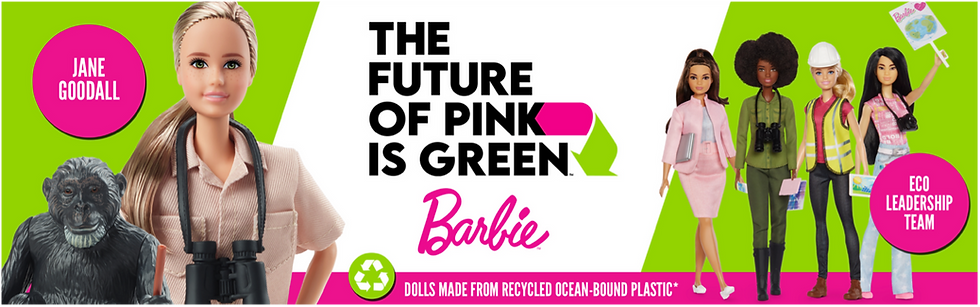
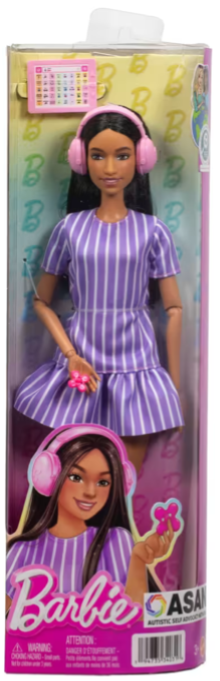

In de afgelopen twee decennia heeft Mattel diverse Barbiepoppen uitgebracht om te laten zien dat het bedrijf inclusiviteit omarmt. Zo kwam in 2012 pop Ella op de markt die lijdt aan haarverlies vanwege kanker, alopecia of een andere medische aandoening. In 2016 werd de New Body Types collectie uitgebracht met tall, petite en curvy Barbies en kwam in 2019 de lijn Creatable World met genderneutrale Barbiepoppen uit. Denkend aan het klimaat werd in 2022 een Dr. Jane Goodall Barbiepop uitgebracht (zij was antropologe en biologe) en werden er poppen gemaakt van gerecycled ocean-bound plastic. Tot slot bracht Mattel in 2023 een Barbiepop uit met het syndroom van Down, in 2025 een pop met diabetes type 1 en in 2026 een Barbiepop die autisme heeft.
In 1970 nam Ruths leven een onaangename wending: ze werd gediagnosticeerd met borstkanker en in datzelfde jaar onderging ze een mastectomie. Deze gebeurtenis viel Ruth enorm zwaar: ‘Toen ik mijn borst verloor, was het alsof ik mijn vrouwelijkheid daarmee ook kwijt was.’ Vanwege haar ziekte spendeerde ze minder tijd bij Mattel en verloor ze haar leiderschap in het bedrijf. Wanneer in 1973 de Securities and Exchange Commission (SEC, een Amerikaans bedrijf dat toezicht houdt op organisaties en individuen) onderzoek deed bij Mattel, werd Ruth aangeklaagd voor het plegen van mail fraude, het indienen van enkele frauduleuze financiële rapporten en het afleggen van valse verklaringen aan de SEC. Ruth moest Mattel verlaten in 1975 en ook Elliot besloot om niet verder te gaan in het bedrijf. Ondanks dat Ruth de verdenkingen van fraude ontkende en de oorzaak van haar fouten bij haar ziekte legde, werd haar een geldboete opgelegd van 57.000 dollar en een taakstraf van 2.500 uur.
Haar ziekte en de aanklacht beletten Ruth niet het bedrijfsleven weer in te stappen. Toen ze na haar mastectomie op zoek ging naar een goede borstprothese, kwam ze erachter dat er helemaal geen fatsoenlijke borstprothesen te verkrijgen waren. Ze werd verteld haar bh op te vullen met opgerolde panty’s en handschoenen. Zoals haar dochter Barbara vertelde in een interview met de New York Times: ‘Toen ze naar een warenhuis ging om ze te passen, was het personeel erg abrupt, onbeschoft. Ruth verafschuwde de manier waarop ze werd behandeld. En het product was niet eens degelijk.’
“Ze zijn ontworpen door mannen die het verdomde ding niet hoefden te dragen.” - Ruth Handler
Ruth vertelt dat de prothesen werden gemaakt door mannen die ze zelf niet eens hoefden te dragen. Daarom besloot ze om zelf borstprothesen te maken om andere vrouwen te helpen hun eigenwaarde terug te krijgen:
“Toen ik Barbie op de wereld bracht, geloofde ik dat het belangrijk was voor de eigenwaarde van meisjes om te spelen met poppen die borsten hadden. Nu vind ik het zelfs nog belangrijker om die eigenwaarde aan vrouwen die hun borsten hebben verloren, terug te geven.” - Ruth Handler
Ruth richtte haar nieuwe bedrijf Ruthton Corporation op en produceerde realistische prothesen voor vrouwenborsten, gemaakt van siliconen en schuim. Het product kreeg de naam Nearly Me en kwam op de markt voor links, rechts en reguliere bh-maten. De prothesen leken zo echt dat ‘een vrouw haar normale bh kon dragen, haar borst vooruit kon steken en trots kon zijn.’

Ruth deed er alles aan om haar product populariteit te geven. Zo kwam ze op televisie en toonde ze haar buste en journalisten en andere vrouwen mochten haar zelfs aanraken om de levensechte textuur van de prothesen te voelen. Ruth heeft zoveel vrouwen geholpen hun levenskwaliteit te verbeteren, inclusief first lady Betty Ford, dat dit werk voor Ruth het meest heeft betekend. Ze vertelt: ‘Ik verdiende er niet veel geld aan. Het heeft zeker mijn eigenwaarde hersteld en ik denk dat ik de eigenwaarde van anderen heb vergroot.’

Ruth heeft voor haar levenswerk veel eer ontvangen. Zo is ze benoemd tot Vrouw van het Jaar in het Bedrijfsleven, is ze opgenomen in de Hall of Fame van de speelgoedindustrie, heeft ze de Vrijwilligersprijs van de Amerikaanse Kankervereniging gekregen en was ze de eerste Vooraanstaande Vrouw van de United Jewish Appeal (de belangrijkste joodse filantropische overkoepelende organisatie totdat deze werd gecombineerd met een ander).
In haar werk stond één onderwerp centraal dat voor veel vrouwen een grote impact heeft gehad op hun leven: borsten. Bij Barbie stonden borsten symbool voor volwassenheid, waarmee Ruth meisjes liet geloven in een toekomst waarin zij alles konden worden waar zij van droomden. Met haar Nearly Me borstprothesen gaf Ruth vrouwen hun eigenwaarde en zelfvertrouwen terug nadat zij hun borsten hadden verloren.
In 2002 sterft Ruth Handler op 85-jarige leeftijd aan complicaties na een operatie voor darmkanker, maar ze laat een groot nalatenschap achter dat meisjes en vrouwen kracht geeft.
Bronnen:
(1997). ‘1997 Laureate. Ruth Handler’. Global Business Hall of Fame. Geraadpleegd op 30-03-2026 via: https://www.businesshalloffame.org/ruth-handler.
(2023, 14 juli). ‘The Barbie movie gives a nod to the doll’s creator Ruth Handler’. BBC Culture. Geraadpleegd op 30-03-2026 via: https://www.bbc.com/culture/article/20230714-barbie-creator-ruth-handler-on-the-real-life-inspiration-for-the-doll.
Altman, J. ‘Ruth Mosko Handler’. Jewish Women’s Archive. Geraadpleegd op 30-03-2026 via: https://jwa.org/encyclopedia/article/handler-ruth-mosko.
Balraadjsing, T. (2023, 20 juni). ‘De bedenker van Barbie heeft haar bewust nooit laten trouwen of kinderen laten krijgen’. Elle. Geraadpleegd op 30-03-2026 via: https://www.elle.com/nl/lifestyle/lifestyle-nieuws/a44596276/reden-barbie-ongetrouwd-kinderloos/.
Broos, R. (2024). Do you speak Barbie? Spraakmakende feiten en verhalen uit 65 jaar Barbie. Lannoo, Tielt, België.
Horwell, V. (2002, 2 mei). ‘Ruth Handler’. The Guardian. Geraadpleegd op 30-03-2026 via: https://www.theguardian.com/news/2002/may/02/guardianobituaries.veronicahorwell.
‘History’. Mattel. Geraadpleegd op 30-03-2026 via: https://corporate.mattel.com/history#1940s.
Nickel, R. (2023). Barbie: van Amerikaans icoon tot springlevend idool. Contour, Soesterberg, Nederland.
Tamkin, E. (2023, juni). ‘A Cultural History of Barbie’. Smithsonian magazine. Geraadpleegd op 30-03-2026 via: https://www.smithsonianmag.com/arts-culture/cultural-history-barbie-180982115/.
Zaltzman, L. (2023, 19 juli). ‘The Jewish Story of Barbie’s Inventor, Ruth Handler’. Kveller. Geraadpleegd op 30-03-2026 via: https://www.kveller.com/the-jewish-story-of-barbies-inventor-ruth-handler/.

Heleen van Rossum behaalde onlangs de master Design Cultures in Amsterdam. Ze schrijft graag over de geschiedenis van mode, kunst en design, en hun wisselwerking met de maatschappij.
- ENGLISH BELOW -
Nowadays, Ruth Handler is mostly being associated with Barbie. As businesswoman and creator of the world-famous doll, she played an important role in breaking with the traditional ideas of the position of women in society. She created an adult doll with breasts who had countless of career possibilities and made girls dream of a future outside of the then prevailing gender roles. But Barbie was not Ruth’s only creation that changed women’s lives. After Ruth had undergone a mastectomy, she decided to design breast prosthetics—a market that was then hardly developed. She created the Nearly Me breast prosthetics with which Ruth helped many women regain their confidence after having had such a major surgery. This way, Ruth Handler left a great legacy for women worldwide. But how did she get these innovative ideas, and in which ways did her designs influence the lives of so many women?
Ruth Handler was born as Ruth Marianna Mosko in 1916 in Denver, Colorado, in the United States, where her parents emigrated to from Poland to escape conscription and antisemitism. She grew up as the youngest of ten children. Her family valued entrepreneurship and creativity, and it was normal for them that women worked outside of the home.
In 1932, Ruth fell in love with a poor art student named Isadore Elliot Handler (‘Izzy’). During her second year at the University of Denver, Ruth went on holiday to Los Angeles where she got a job at Paramount Studios. Not long after that, Izzy moved to the same city. As Izzy was poor and didn’t have a good network, Ruths parents were afraid that they would marry. But Ruth didn’t care about other people’s opinion. She proposed to Izzy, and they married in 1938 in Denver—with the approval of Ruth’s family. They returned to California, and Ruth suggested that Izzy changed his name to his second name Elliot. They had two children: Barbara and Kenneth.
Together with business associate Harold ‘Matt’ Matson, Ruth and Elliot created the company Mattel in 1945. The name was a fusion of the names of the two men. The company’s first production was that of photograph frames, and even though this production was Ruth’s idea, it never occurred to them to include her name in the company’s name as well. Later, Mattel produced doll house furniture that was made from the leftovers of the photograph frames, and the production expanded to other toys, such as the Uke-A-Doodle, a toy ukelele. But the toy industry really changed with the production of Barbie.
When World War II came to an end, women were expected to retract themselves from the working environment and to focus again on the household and the children; the stereotypical ‘woman’ had to become visible again. Ruth had already seen her daughter with her friends playing with paper dolls and was fascinated how they projected themselves on the dolls as grown-up women. Since then, Ruth was determined to find an alternative for these paper dolls. She thought of an adult doll with breasts as independent individual that shouldn’t have to fulfil the role of mother or housewife, but she could become everything she dreamed of. This way, girls between the age of five and twelve could dream of the adult life with the help of the doll.
She proposed the idea to Elliot and the designers at Mattel (of whom the majority was man), but nobody was enthusiastic about the idea. Although Ruth was under the impression that the men were terrified of the idea of a doll with breasts, they simply said that a female doll with polished nails, nice clothing with zippers, dowels and hems couldn’t be produced for a fair price. After this, Ruth refrained from the idea of an adult female doll. Until a holiday in Switzerland.
When the Handler family was on a road trip to Europe in 1956, they passed a toy store in Luzern, Switzerland. In the display they saw a female doll of approximately 30 centimetres long named Bild Lilli. She was based on the cartoon character Lilli that occurred in the conservative West-German paper Bild. The doll was sitting on a swing and was dressed in European-style ski clothing, had a platina ponytail, black eyeliner and red painted lips. Next to her, there were six or seven dolls of the same type, but each was dressed in a different ski outfit. Ruth’s daughter Barbara wanted to have such a doll but couldn’t choose between the many costumes. So, Ruth asked the shop assistant if she could combine them. This wasn’t possible: ‘No, if you want that outfit, you buy that doll; if you want this outfit, you buy this doll.’ And it was this moment that Ruth felt confident again to further develop her earlier idea.
Ruth brought the Bild Lilli dolls to her home in the United States and used them as study material. She examined the details of the adult posture and wanted to take over the concept of interchangeable clothing. This marketing trick was like the razor blades of Gillette: a cheap holder with expensive blades. Because similar to the holder being nothing worth without the blades, the doll was nothing worth without the clothing.
The design and the production of the doll was not in the Unites States, but in Japan. The Japanese yen was weak which made the production cheap. Charlotte Johnson became Barbie’s first official fashion designer, and together with Japanese seamstress Fumiko Miyatsuka they shared ideas on designs and fabric without speaking a common language. As the breasts of the doll were very large in comparison to the size of her body, designing Barbie clothing was a challenge; nothing they drew fitted the doll.
“Little girls just want to be bigger girls.” - Ruth Handler
Barbie, named after Ruth and Elliot’s daughter Barbara, made her entry during the American International Toy Fair in New York on March 9, 1959. She had a characteristic blonde ponytail, red lips, bent eyebrows, and wore a black-wite striped bathing suit. Her feet were always pointing upwards—even when she didn’t wear heels—and had holes on the bottom so she could stand perfectly straight in the supplied stand. She had an extremely small waist, long legs, and a full bosom as Ruth’s opinion was that ‘Little girls just want to be bigger girls.’
When Barbie was released for the first time, only one third of the female population in the Unites States was active on the job market. Yet, Barbie did have a job. But her sales were not great yet. Lisa McKnight, global head of Barbie since 2016 and Executive Vice President and Global Head of Barbie and Dolls since 2019, claims that the reason for the low sales was probably due to the male dominance in business: ‘Nobody saw something in it. The sellers, buyers as well as the shop owners were all men. And they didn’t know what to do with Barbie. It was polarizing and uncomfortable to see such a female formed doll as a children’s toy.’ Ruth on the other hand stated that ‘The idea behind Barbie was to make girls dream of the adult life. And every adult woman they see, has breasts.’
So, Ruth chose a different sales tactic: a commercial that was broadcasted during the popular television show The Mickey Mouse Club on television channel ABC. This way, the promotion of the new toy landed with the children. M.G. Lord, author of the reference book Forever Barbie: The Unauthorized Biography of a Real Doll, explains that the commercial purposely responded to conservative America because it ended with Barbie in a wedding dress. That way, worried parents were being consoled with the idea that Barbie’s goal was to get married. The singing voice that supported the commercial glorified also Barbie’s authenticity and figure: ‘Barbie, you’re beautiful! You make me feel, my Barbie doll is really real. Barbie’s small and so petite, her clothes and figure look so neat.’
This commercial led to an increasing demand for the doll. Barbie was sold for three dollars, her multiple outfits for one to five dollars. She was so loved by the public that the manufacturer couldn’t even keep up with the demand for the doll. Until this day, she is a beloved doll and has had over two hundred careers such as astronaut, doctor, president, yoga instructor, and ballerina. The idea that girls could have any job they dreamed of as being strengthened by the 1985 slogan ‘We Girls Can Do Anything’.
The first year the Barbie dolls were on the market, Mattel sold 350,000 items, and the company made profits of 100 million dollars. At the end of 1964, magazine The Saturday Evening Post claimed that the Barbie circuit had five thousand employees in Japan, eight hundred in California, and multiple press agents and advertising executives. There was even a secretary to answer the twenty thousand fan letters a week.
In March 1961, Barbie receives male counterpart Ken, named after Ruth and Elliot’s son. Ken’s production was a safe bet as Barbie’s accessory, just like her plastic sports car and cardboard apartment. Ken had no background story and had ‘only’ 9 outfits in comparison to Barbie’s 23 outfits. So little research had been done on Ken that his hair fell out when being in contact with water. After this incident, a new version of Ken was being produced in 1962 with a moulded plastic haircut.
Ken was being positively received by the public as his function was to expand the play scenarios so children’s imagination could be stimulated. Even though Ken’s success will never reach that of Barbie, one Ken is being sold for every seven Barbies. Also, Ken has opened the toy market for male dolls. In 1964, the action soldier G.I. Joe, made by rival Hasbro, came on the market—with changeable clothes.
Barbie and Ken will never marry or have children. Jill Barad, former CEO of Mattel from 1997–2000, explains:
“Barbie can’t have children. And the reason she can’t have children is because she can’t marry. If we as trademark holders let her marry, the public will think she will be married forever. That would take away the open ending of the children playing with the dolls.”
However, Barbie’s world is being expanded with friends, younger sisters, and a best friend for Ken named Allan. This growth enabled Barbie to turn into a cultural icon, and until this day, countless versions of the doll have been introduced in all forms, sizes and professions. According to Nancy Gibbs, former chief editor of magazine TIME, the secret to Barbie’s success is that she constantly evolves, just like every little girl who grows up and changes every generation. Colleen P. Kirk, marketing professor at the New York Institute of Technology, has performed research on psychology and consumer behaviour and concludes the following concerning Barbie:
“When girls adjust their Barbie dolls, they actively take part in a process of self-identification. They not only explore their own personality and aspiration but also project them onto the doll. By personalizing their dolls with diverse outfits, accessories, haircuts, and even professional identities, children create unique representations of their ideal self. This way, Barbie becomes a catalyst for self-exploration and empowerment.”
Even though Barbie has had many successes, she is also a subject of criticism. Researchers claim that Barbie supports an unrealistic body shape, which can be detrimental for young girls’ eating patterns. In 2010, research of the Radboud University in Nijmegen has shown that girls from the age of 6 until 10 years who play with dolls such as Barbie eat less than girls who play with dolls that have more realistic body shapes. In addition, researchers of the University Central Hospital in Finland claim that Barbie misses 17 to 22 per cent body fat that a woman needs to menstruate.
Barbie has had not only criticism on her body shape but also on the shortage of diversity of ethnicities and skin tones. Since the original Barbie doll has a white skin tone and a blonde hair colour, the multicultural society wasn’t being represented. As a reaction on this criticism, the first doll of colour was produced in 1967. Barbie got a niece, Francie. Four versions of Francie were made, including two with a dark skin tone.
But these dolls were not a success, as Janine Fennick describes in her book The Collectible Barbie Doll: ‘Although they are very pretty, even the most liberal households find it difficult to justify a white Barbie with an Afro-American niece.’ One year later, a new doll was launched: Christie, a friend of Barbie with a black skin tone and the natural facial features of a black woman. As she has the same body shape as the original Barbie, the clothing is interchangeable.
Mattel has also responded to the comments on Barbie’s body shape. In 1997, Barbie’s bosom was reduced from a C- to a B-cup to make her body more realistic. Also, Barbie’s waist became less narrow. But Mattel hasn’t admitted that these changes took place to answer the social criticism; the company claims that the contemporary fashion designs better fit the dolls with the adjusted sizes.
In addition, a new doll enters the market in 1997: Becky, a Barbie doll in a pink wheelchair who is directed to children with a disability. Unfortunately, the size of the wheelchair wasn’t taken into consideration, so it didn’t fit through the door of the Barbie Dreamhouse.
Years later, in 2016, Mattel produces the collection Fashionistas. This line consists of dolls with 4 different body shapes, 7 skin tones, 22 eye colours and 24 hair styles, showing that Barbie dolls are all different, similar to people in the real world. Even the new slogan ‘Imagination comes in all shapes and sizes’ was made, as well as the hashtag #TheDollEvolves. This collection was advertised with a commercial in which children tell why they love their new Barbie so much. Every child says that they have friends or family members that resemble the new dolls.
In the past two decades, Mattel launched several Barbie dolls to show that the company embraces inclusivity. In 2012, the company introduced doll Ella who suffers from hair loss due to cancer, alopecia or another medical condition. In 2016, the collection New Body Types was launched, consisting of tall, petite and curvy Barbies, and in 2019, the line Creatable World with gender neutral dolls was released. Thinking of the climate, a doll that resembles Dr. Jane Goodall (she was anthropologist and biologist) was introduced, and Mattel produced dolls made from recycled ocean-bound plastic, both in 2022. Lastly, Mattel launched a Barbie doll that has down syndrome in 2023, one that has diabetes type 1 in 2025, and one that has autism in 2026.
In 1970, Ruth’s life took on an unpleasant turn: she was diagnosed with breast cancer, and in that same year she underwent a mastectomy. This event was very significant for her: ‘When I lost my breast it was as if I lost my femininity.’ Due to her illness, she spent less time with Mattel and lost her leadership in the company. When in 1973 the Securities and Exchange Commission (SEC, an American company that monitors organisations and individuals) investigated Mattel, Ruth was being charged for committing mail fraud, falsifying financial document, and making false statements to the SEC. Ruth was made to leave Mattel in 1975, and also Elliot decided not to continue with the company. Even though Ruth denied the charges with fraud and claimed her errors were due to her illness, she was fined with 57,000 dollars and sentenced with community service of 2,500 hours.
Her illness and charges didn’t stop Ruth from ending her entrepreneurial career. After her mastectomy, she searched for a breast prosthetic and concluded that there were no decent ones available as she was told to stuff her bra with rolled up stockings and gloves. Her daughter Barbara claims in an interview with the New York Times: ‘When she went to a department store to get fitted, they were very abrupt, rude. She didn’t like the way she was being treated. And the product wasn’t decent.’
“They were designed by men who didn’t have to wear the damn thing.” - Ruth Handler
Ruth further explains that the prosthetics were made by men who didn’t even have to wear them. Therefore, she decided to make breast prosthetics to help women regain their self-esteem:
“When I conceived Barbie, I believed it was important to a little girl’s self-esteem to play with a doll that has breasts. Now I find it even more important to return that self-esteem to women who have lost theirs.” - Ruth Handler
Ruth established her new company Ruthton Corporation and produced realistic prosthetics of women’s breasts, made of silicone and foam. The product’s name was Nearly Me and was made for left, right, and regular bra sizes. The prosthetics looked so real that ‘a women could wear a regular brassiere, stick her chest out and be proud.’
Ruth did everything in her power to popularize her product. She went on television and showed her bust, and journalists and other women could even touch her to experience the lifelike texture of the prosthetics. Ruth has helped so many women improve their life quality, including first lady Betty Ford, that this work has meant the most for her. She states: ‘I didn’t make a lot of money in it. It sure rebuilt my self-esteem, and I think I rebuilt the self-esteem of others.’
Ruth has received great honours for her life’s work. She was named Woman of the Year in Business, was inducted into the Toy Industry Hall of Fame, received the Volunteer Achievement Award of the American Cancer Society, and was the first Woman of Distinction of the United Jewish Appeal (the primary Jewish philanthropic umbrella organization until it was combined with another philanthropic organization).
There was one central subject in Ruth’s work that has had a great impact on many women’s lives: breasts. For Barbie, breasts were the symbol of adulthood with which Ruth let girls believe in a future in which they could be anything they dreamed of. With her Nearly Me breast prosthetics, Ruth helped women regain their self-esteem and confidence after having lost their breasts.
In 2002, Ruth Handler dies at the age of 85 due to complications after a surgery for colon cancer, but she leaves a great legacy that empowers girls and women.
Sources:
(1997). ‘1997 Laureate. Ruth Handler’. Global Business Hall of Fame. Seen on 30-03-2026 via: https://www.businesshalloffame.org/ruth-handler.
(2023, 14 juli). ‘The Barbie movie gives a nod to the doll’s creator Ruth Handler’. BBC Culture. Seen on 30-03-2026 via: https://www.bbc.com/culture/article/20230714-barbie-creator-ruth-handler-on-the-real-life-inspiration-for-the-doll.
Altman, J. ‘Ruth Mosko Handler’. Jewish Women’s Archive. Seen on 30-03-2026 via: https://jwa.org/encyclopedia/article/handler-ruth-mosko.
Balraadjsing, T. (2023, 20 juni). ‘De bedenker van Barbie heeft haar bewust nooit laten trouwen of kinderen laten krijgen’. Elle. Seen on 30-03-2026 via: https://www.elle.com/nl/lifestyle/lifestyle-nieuws/a44596276/reden-barbie-ongetrouwd-kinderloos/.
Broos, R. (2024). Do you speak Barbie? Spraakmakende feiten en verhalen uit 65 jaar Barbie. Lannoo, Tielt, België.
Horwell, V. (2002, 2 mei). ‘Ruth Handler’. The Guardian. Seen on 30-03-2026 via: https://www.theguardian.com/news/2002/may/02/guardianobituaries.veronicahorwell.
‘History’. Mattel. Seen on 30-03-2026 via: https://corporate.mattel.com/history#1940s.
Nickel, R. (2023). Barbie: van Amerikaans icoon tot springlevend idool. Contour, Soesterberg, Nederland.
Tamkin, E. (2023, juni). ‘A Cultural History of Barbie’. Smithsonian magazine. Seen on 30-03-2026 via: https://www.smithsonianmag.com/arts-culture/cultural-history-barbie-180982115/.
Zaltzman, L. (2023, 19 juli). ‘The Jewish Story of Barbie’s Inventor, Ruth Handler’. Kveller. Seen on 30-03-2026 via: https://www.kveller.com/the-jewish-story-of-barbies-inventor-ruth-handler/.
Heleen van Rossum recently earned her master’s degree in Design Cultures in Amsterdam. She enjoys writing about the history of fashion, art, and design, and their interaction with society.


Op basis van de tekst blijkt dat de reikwijdte van de beweringen passend is beperkt. Interpretaties blijven verankerd in verifieerbare gegevens. De website versterkt het hier besproken analytische kader. Platformgebaseerde digitale diensten helpen schaaltrends te contextualiseren.