


HISTORISCHE KLASSIEKERS
- Sebastiaan Coops en Jasmijn Groot

- 12 mei
- 18 minuten om te lezen
'Vrouwelijke auteurs uit het verleden hebben ons nog steeds iets te zeggen'
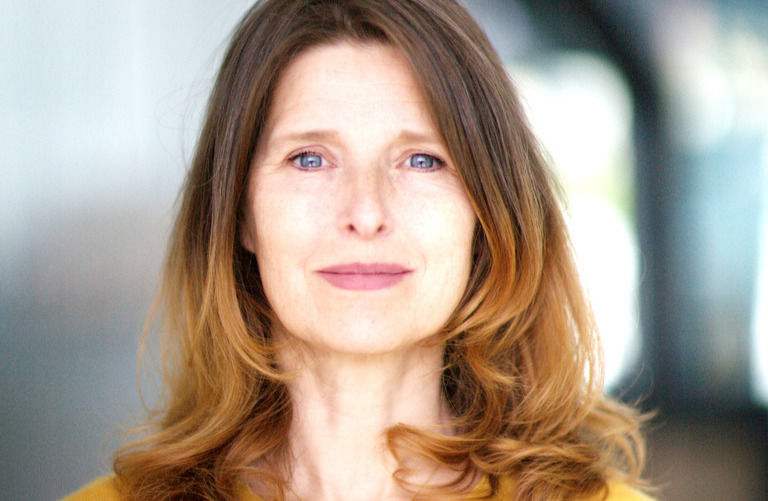
Waarom kunnen we in Nederland moeiteloos een aantal namen van mannelijke schrijvers uit de canon opnoemen, terwijl zoveel vrouwelijke auteurs uit het collectieve geheugen verdwenen zijn? Volgens Fleur Speet moet dat maar eens veranderen. Als schrijver, onderzoeker en medeoprichter van Fixdit zet zij zich in voor meer diversiteit in de literaire canon. Met haar nieuwe podcast Historische Klassiekers brengt ze vrouwenstemmen ten gehore die eeuwenlang onderbelicht bleven. Daarbij gaat het haar niet alleen om historische rechtvaardigheid, maar ook om de vraag wat deze vrouwen ons vandaag nog kunnen vertellen.
In haar Amsterdamse woonboot nemen we met zijn drieën plaats in de studeerkamer; een kamer gevuld met talloze boeken van vrouwen en over vrouwengeschiedenis. Fleur steekt meteen van wal. Over de ‘rasechte’ feministe Hella Haasse en haar belangrijke maar vaak vergeten werk over vrouwen, of het invloedrijke proefschrift van Annie Romein Verschoor, Vrouwenspiegel, over Nederlandse vrouwelijke romanschrijvers na 1880. Maar ook over de slimmigheid van Christine de Pizan die in haar boek Het Boek van Stad der Vrouwen de kerkvaders de maat neemt. Tijdens ons gesprek wordt onze leeslijst voor inspirerende vrouwelijke auteurs steeds langer. Dit laat zien wie Fleur is: een gepassioneerd onderzoeker naar vrouwen uit het verleden.
Fleurs fascinatie voor vrouwelijke auteurs stamt al uit haar jeugd. ‘Rond mijn zestiende viel me iets op,’ vertelt ze. ‘Ik kreeg in mijn jeugd een piemeltje aangemeten, want de hoofdpersonen van de boeken die ik las waren meestal jongetjes of mannen. Op school en aan de universiteit kreeg ik les over bijna alleen maar mannelijke auteurs, mannen in de filosofie, mannen in de geschiedenis. Mannen, mannen, mannen. Ik vond dat zo eenzijdig.’
Momenteel onderzoekt Fleur leven en werk van de zeventiende-eeuwse dichter Tesselschade Roemers. Net als voor het Historical Women project, bleek de coronaperiode een vruchtbare periode. ‘Toen bedacht ik dat ik een kinderboek wilde schrijven voor mijn dochters; zij moesten weten dat er vroeger ook vrouwen waren die ertoe deden. Toevallig was ik op het Muiderslot en daar raakte ik geïnspireerd: Roemers kwam daar zomers achtereen bij Pieter Hooft en zijn vrouw Leonora Hellemans logeren. Toen ik informatie verzamelde, vond ik niet zoveel en de feiten die ik vond spraken elkaar vaak tegen. Bovendien, het beeld dat oprees, frustreerde me: de Muze, belangrijk door de mannen om haar heen. Dus toen dacht ik: “ik ga zelf maar onderzoeken wat waar is.”’ Fleur dook de archieven in. Dat bleek niet zo makkelijk, want de bronnen zijn geschreven in zeventiende-eeuws Nederlands - qua woordenschat én handschrift. ‘Dat is niet te ontcijferen als je ongeoefend bent!’ zegt ze.

Pas toen ze beter leerde transcriberen, begreep ze dat de positie van vrouwen in de zeventiende-eeuwse Nederlandse Republiek complexer was dan ze altijd had aangenomen. Het verbaasde haar hoeveel vrouwennamen ze in de notarisarchieven tegenkwam: 'Het is wel verklaarbaar, weet ik nu. Nederland was relatief geletterd, ook meiden gingen naar school. Ze leerden lezen en rekenen, wat handig was in een handelseconomie. Daarnaast vochten veel mannen tijdens de Tachtigjarige en Dertigjarige Oorlog of zaten op zee, waardoor vrouwen de zaken die zij achterlieten moesten overnemen. Ik dacht altijd dat vrouwen in het verleden thuis zaten en enkel huishoudelijke taken hadden,’ zegt ze. ‘Dat bleek dus een misvatting.’
Zelfs over de kleinste details leest Fleur zich in. ‘Ik dacht: “ik lees gewoon de plank leeg bij de bibliotheek - alles over de zeventiende eeuw.” Zo hoopte ik te begrijpen wat voor leven Roemers leidde. Voor een roman wil je weten waar ze sliep. Wat voor bed was dat? Als ze dan opstond, deed ze sloffen aan? Wat voor sloffen? Hoe viel het ochtendlicht in de kamer? Liep ze over een houten vloer of over tegels? Ja, dan pak ik er toch de archeologische vondsten bij. Nu ben ik wel heel gedetailleerd, maar ik wilde haar op de huid zitten en de scenes voor me kunnen zien zoals zij ze kan hebben meegemaakt.’
Moderne Klassiekers
In 2020 richtte Fleur het schrijverscollectief Fixdit op - samen met Yra van Dijk, Sanneke van Hassel, Rachida Lamrabet, Jannah Loontjes, Christine Otten, Gaea Schoeters, Shantie Singh, Manon Uphoff en Annelies Verbeke. Later breidde het collectief zich uit met Joke van Leeuwen en Tessa Leuwsha. FixDit streeft naar meer diversiteit in de canon en de literaire wereld. Door middel van acties, essays, open brieven en gesprekken wil Fixdit het bewustzijn over genderongelijkheid in de letteren vergroten en de canon uitbreiden met werk van belangrijke vrouwelijke auteurs. In 2022 schreven ze hun manifest Optimistische woede, waarin ze hun verontwaardiging over de ongelijke positie van vrouwen in de letteren uitten. In 2024 kregen ze daarvoor de Carla Atzema Soroptimistprijs toegekend.
In 2021 begonnen Jannah Loontjes en Annelies Verbeke met de podcastserie Moderne Klassiekers. Ze behandelden zeventien Nederlandstalige en een Egyptische vrouwelijke schrijver uit de twintigste eeuw met hun belangrijkste werk – van Een Revolverschot van Virginie Loveling uit 1911 tot Sarnami hai van Bea Vianen uit 1969, van De schaamte voorbij van Anja Meulenbelt uit 1976 tot Het onverwachte antwoord van Patricia de Martelaere uit 2004.
‘Wat opvalt is dat de auteurs die in deze podcast werden behandeld in hun eigen tijd populair waren,’ vertelt Fleur. ‘Vaak deden ze ook vernieuwende dingen. Maar dat is niet meegenomen in de literatuurgeschiedenissen of in de canon. Dus daar is ergens iets weggevallen. Dat komt door de manier waarop wij naar vrouwelijke auteurs kijken. Onze waarde-oordelen zijn gekleurd door onze culturele normen. De wetenschappers Marianne Vogel en Corina Koolen toonden dat aan.’
Geïnspireerd door haar onderzoek naar Roemers én omdat ze merkt dat zoveel kennis over vrouwen van vroeger nog onbekend is bij het grote publiek, bedenkt Fleur een aanvulling op Moderne Klassiekers: Historische Klassiekers.
Historische Klassiekers
Historische Klassiekers ging afgelopen januari van start. Aan de basis ervan liggen hertalingen van historisch werk van elf vrouwelijke auteurs, gemaakt door moderne schrijvers. In elk van de afleveringen onderzoekt Fleur samen met de hertalers en aangeschoven wetenschappers hoe de historische vrouwen schreven, leefden en zich verhielden tot hun tijd. Elke aflevering draait om één historische schrijver die leefde tussen 1500 en 1800. Zoals Isabella de Moerloose, over #metoo en lichamelijkheid. Of Johanna Hobius over het recht van vrouwen om te schrijven en leren. Of Petronella Moens die pleit voor vrouwenonderwijs, vrouwenrechten en maatschappelijke betrokkenheid. De afleveringen combineren steeds literaire analyse, historische context en moderne hertalingen naast de oude teksten, die in de podcast door de wetenschapper worden voorgedragen. Het werk van de historische auteur wordt zo opnieuw geïnterpreteerd. Daardoor krijgen luisteraars niet alleen inzicht in de historische betekenis van deze vrouwen, maar ook in de actuele relevantie van hun teksten.
‘Het zijn vooral de hertalingen die de afleveringen zo toegankelijk maken,’ zegt Fleur. ‘Je snapt meteen waar het over gaat, terwijl het voor de hertalers een flinke klus was. Daarover vertellen ze in de podcast. Bestond het woord "consent" echt al in de zeventiende eeuw? Hoe kun je vrijheidsdrang zo omzetten dat wij nog net zo geraakt worden als de mensen toen? Alfred Schaffer doet dat met een verwijzing naar Virginia Woolf in een gedicht van Anna Roemers. Volstrekt anachronistisch, maar zo verhelderend.’
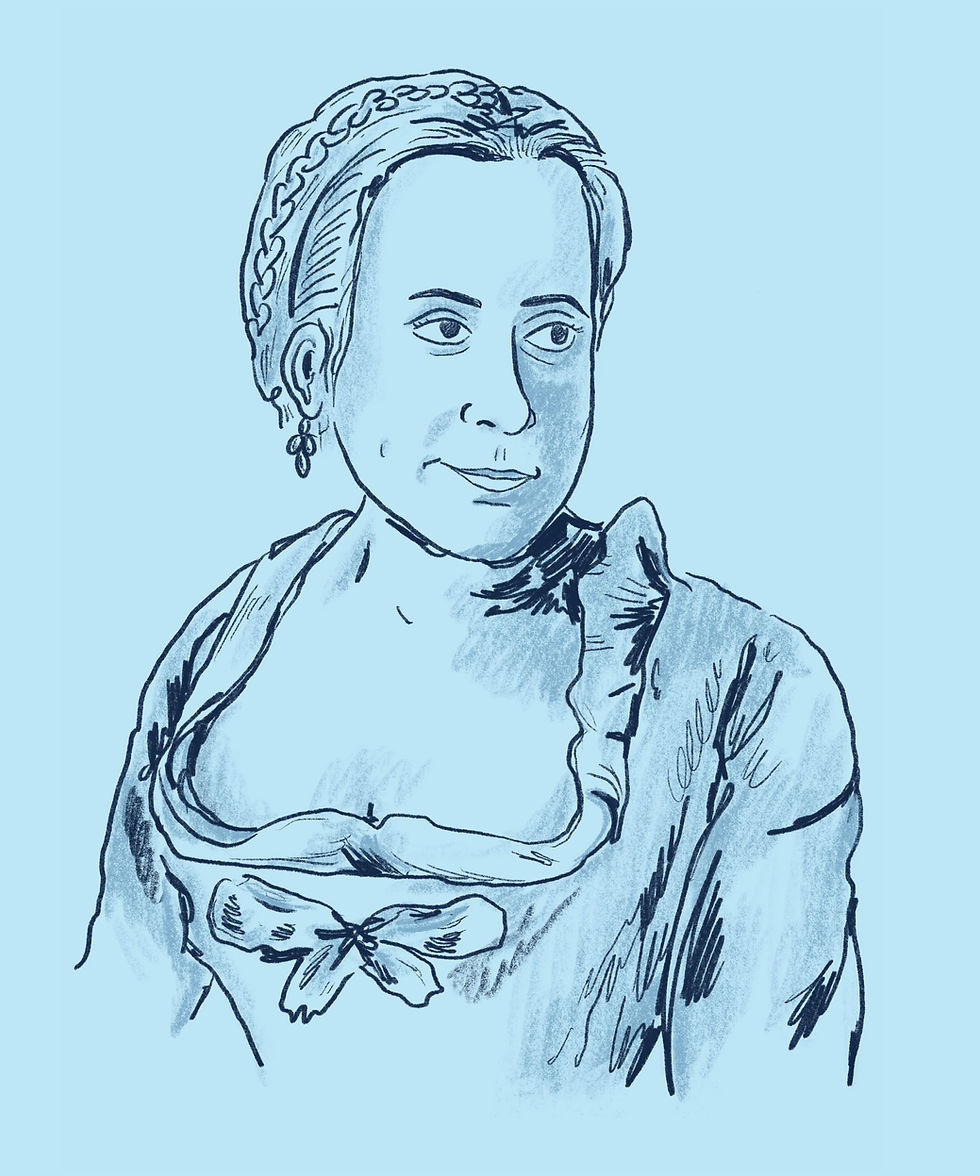
‘Babs Gons is ook ludiek, met een fragment uit een toneelstuk van Lucretia Wilhelmina van Merken.’ Haar tragedie Het beleg der stad Leyden uit 1774 gaat over het beleg en ontzet van Leiden tijdens de Tachtigjarige Oorlog, ter viering van tweehonderd jaar Leidens Ontzet. De inwoners van Leiden moesten het opnemen tegen de Spaanse belegeraars. In de stad heersten honger, ziekte en wanhoop, maar ze weigerden zich over te geven. De Spaanse bevelhebber is verliefd op Magdalena Moons en zij overtuigde hem de aanval op de stad uit te stellen, waardoor Leiden tijd won en de stad werd ontzet.
‘Babs versterkt de kracht van Van Merkens tragedie door het fragment te verplaatsen naar Khartoem in Sudan. Daarmee laat ze zien hoe universeel zo'n beleg is, maar ook dat een vrouw van beslissende invloed kan zijn. Leiden won door haar toedoen. En het is zo actueel: het gaat nog steeds om dezelfde emoties, om een stad die totaal op slot zit met mensen die niets te eten hebben en niet weten wat waar is. Het kon ook over Gaza gaan, of Marioepol.’
Van Merken is volgens Fleur niet de enige nog actuele auteur. ‘Anna Bijns zou zichzelf zo vastplakken aan de A12 met Extinction Rebellion,’ vertelt ze. ‘Aagje Deken en Betje Wolff zouden nu lid zijn geweest van de Partij voor de Dieren. Katharina Lescailje waarschuwde voor tirannen zoals Trump.’
Inspiratie
Maar welke van de elf afleveringen is Fleur het meest dierbaar? 'Nou,' begint ze. 'Er zitten ook nog 34 bonusauteurs bij. In kleine vignetjes geven we hen aandacht om te laten zien dat al deze auteurs geen stippen zijn, maar dat ze lange lijnen vormen en op elkaar voortbouwen. Dus ja, dat is moeilijk kiezen,’ zegt ze. ‘Ik vond die over Lescailje mooi, met Marijke Meijer Drees en Ellen Deckwitz. Lescailje was drukker, ze erfde het bedrijf van haar vader. Ik had haar in beginsel overgeslagen, tot ik erachter kwam dat haar in 1731 uitgegeven verzamelde werk heel veel vrouwen inspireerde. Zij dachten: “zij kan dat, dan kan ik het ook." Lescailje mocht dus niet ontbreken. Maar ik vind ze allemaal erg geslaagd. Ik ben zo trots op de hertalers en op het plezier van de wetenschappers. Ik ben iedereen dankbaar die aan deze podcast heeft bijgedragen. Ik ben zelfs de historische auteurs dankbaar, dat ze ooit hun pen oppakten om ons iets te vertellen.’

Het maken van de podcast was een bijzondere ervaring. Zo vond de opname van de aflevering over Tesselschade Roemers op de zolder van het Muiderslot plaats, op een zomeravond na sluitingstijd, met Ilja Leonard Pfeijffer en Olga van Marion. 'Je hoort het kraken en dan grapt Olga dat de geesten er nog zijn. Zo voelde het ook.’
Ze bespraken onder meer een gedicht van Roemers over verlies en rouw. Het is een troostbrief aan Constantijn Huygens. Zijn vrouw Sterre was overleden. Een van Roemers inzichten luidt dat je verdriet moet opschrijven, zodat je het niet voortdurend hoeft mee te dragen. Ze noemde het papier haar wapentuig waarmee ze voorkwam dat ze wilde sterven. Pfeijffer droeg zijn hertaling voor op zolder. ‘We waren er allemaal stil en geëmotioneerd van,’ vertelt Fleur. ‘Er wordt zoveel leed samengepakt in dat gedicht. De dood ontgaat niemand. Als iemand daar zo liefdevol over kan dichten, met lichamelijkheid, detail en verfijnd taalgevoel – dat levert rillingen van ontzag op.’
Ook andere afleveringen maakten diepe indruk. Zo bezocht ze het museum van Betje Wolff met Abdelkader Benali en Marita Mathijsen. ‘Abdelkader vertelde dat het hem raakte wat Wolff geschreven had,’ zegt ze. ‘Dat raakte mij weer. Hij was verbaasd over de humor, het intellect, over de geweldige ideeën die hem ook weer inspireren.'
'Ik heb bijna alle hertalers gevraagd: “neem je hiervan iets mee in je werk?” De meesten vonden het "contact" met een collega uit het verleden heel bijzonder. Hun werk zou er best eens van kunnen veranderen.' De stemmen van deze eeuwenlang onderbelichte vrouwen kunnen dus nog altijd inspireren. Dat maakt van Historische Klassiekers een podcast die niet alleen maar gaat over literatuurgeschiedenis, maar ook een zoektocht is naar herkenning, inspiratie en verbondenheid over de grenzen van de tijd heen.
Uit het zicht, uit het hart
Volgens Fleur is het een groot gemis dat veel mensen nog steeds onbekend zijn met de vrouwelijke schrijvers die ze in de podcast behandelt. Kennis van deze vrouwelijke auteurs verruimt volgens haar je blik op de wereld. Hun teksten laten namelijk zien dat vrouwen eeuwen geleden al scherpzinnige observaties deden over liefde, verlies, vriendschap en maatschappelijke verwachtingen. Soms kunnen hun woorden zelfs aanvoelen als een soort handleiding voor het leven, alsof ze nog altijd advies geven over hoe je naar jezelf en anderen kunt kijken. De kracht van die teksten zit volgens haar vooral in het vermogen om mensen te ontroeren en te laten nadenken. ‘Je ontneemt en ontzegt jezelf iets moois als je niet weet hoe verschrikkelijk sprankelend en bruisend vrouwen in die tijd dachten en schreven. Het is essentieel voor je medeleven, voor je eigen ontwikkeling en je eigen bestaan om ook het werk van vrouwen te lezen.’
Wat hoopt Fleur bij het publiek teweeg te brengen? ‘Het is de bedoeling dat deze podcastserie echt iets gaat veranderen, daarom zit er ook lesmateriaal bij voor middelbare scholen. Nu realiseer ik mij wel dat ik niet de eerste ben die zoiets nastreeft. Vrouwelijke auteurs worden voortdurend herontdekt. Maar steeds verdwijnen die namen dan weer. Daarom vind ik het zo belangrijk om uit te zoeken waaróm al die namen uit het zicht zijn geraakt. Daarvoor is de laatste aflevering van de serie, de Epiloog, die met publiek wordt opgenomen op 15 mei aanstaande in de Koninklijke Bibliotheek. Iedereen is welkom, ik hoop op uitvoerig debat.'
Fleur voegt toe als wens: 'Die namen moeten nu toch echt een keer permanent aandacht krijgen, dat is de logische stap: dat vrouwelijke auteurs niet de uitzondering zijn, maar dat ze gewoon opgenomen worden in het volledige verhaal. Zonder de mannen overigens weg te drukken. We kunnen ze gewoon toevoegen. Ik zou zeggen: iedere keer als je een man noemt, noem dan ook een vrouw. Ze waren er.’

'Historische Klassiekers' is te beluisteren via de website van FixDit.
De laatste aflevering wordt op 15 mei om 20:00 met publiek opgenomen in de Koninklijke Bibliotheek in Den Haag. Ticket zijn hier verkrijgbaar.

Sebastiaan Coops is historicus en gespecialiseerd in koloniale en wereldgeschiedenis. Hij heeft een bijzondere interesse in materiële geschiedenis en is een echte verzamelaar.

Jasmijn Groot is genderhistorica. Ze publiceert artikelen voor onder andere Opzij en Winq en stelt haar expertise ter beschikking aan verschillende multimedia. Jasmijn studeerde Geschiedenis en Oudheidkunde aan de Universiteit van Amsterdam en de Vrije Universiteit.
- ENGLISH BELOW -
Why is it that in the Netherlands we can effortlessly name several male writers from the literary canon, while so many female authors have disappeared from our collective memory? According to Fleur Speet, that needs to change. As a writer, researcher, and co-founder of Fixdit, she is committed to greater diversity in the literary canon. Through her new podcast Historische Klassiekers (Historical Classics), she gives voice to women who remained overlooked for centuries. For her, it is not only about historical justice, but also about what these women still have to tell us today.
In her Amsterdam houseboat, the three of us settle into her study: a room filled with countless books by women and about women’s history. Fleur immediately launches into conversation. About the “true-blue” feminist Hella Haasse and her important yet often forgotten work on women, or Annie Romein-Verschoor’s influential dissertation Vrouwenspiegel (Women’s Mirror), on Dutch female novelists after 1880. But also about the cleverness of Christine de Pizan, who in The Book of the City of Ladies challenges the authority of the Church Fathers. During our conversation, our reading list of inspiring female authors keeps growing longer. It perfectly illustrates who Fleur is: a passionate researcher of women from the past.
Fleur’s fascination with female authors dates back to her youth. “Around the age of sixteen, something struck me,” she says. “Growing up, I was basically fitted with a little penis, because the protagonists of the books I read were usually boys or men. At school and university, I was taught almost exclusively about male authors, men in philosophy, men in history. Men, men, men. I found it so one-sided.”
At the moment, Fleur is researching the life and work of the seventeenth-century poet Tesselschade Roemers. As with the Historical Women project, the pandemic turned out to be a fruitful period for her. “That’s when I decided I wanted to write a children’s book for my daughters; they needed to know that women in the past also mattered. Coincidentally, I was visiting Muiderslot Castle, and that inspired me: Roemers used to spend summers there with Pieter Hooft and his wife Leonora Hellemans. When I started gathering information, I found very little, and the facts I did find often contradicted each other. On top of that, the image that emerged frustrated me: the Muse, important because of the men around her. So I thought, ‘I’ll just investigate for myself what’s actually true.’” Fleur dove into the archives. That proved far from easy, since the sources were written in seventeenth-century Dutch — both in vocabulary and handwriting. “You simply can’t decipher it if you’re not trained!” she says.
Only after she became better at transcription did she realize that the position of women in the seventeenth-century Dutch Republic was more complex than she had always assumed. She was surprised by how many women’s names she encountered in notarial archives. “It actually makes sense now that I know more about it. The Netherlands was relatively literate, and girls went to school too. They learned to read and do arithmetic, which was useful in a trade economy. On top of that, many men were fighting in the Eighty Years’ War and the Thirty Years’ War or were away at sea, which meant women had to take over the businesses they left behind. I had always thought women in the past stayed at home and only did domestic work,” she says. “That turned out to be a misconception.”
Fleur immerses herself even in the tiniest details. “I thought: ‘I’ll just clear out the entire shelf at the library — everything about the seventeenth century.’ That way I hoped to understand what kind of life Roemers lived. For a novel, you want to know where she slept. What kind of bed was it? When she got up, did she put on slippers? What kind of slippers? How did the morning light fall into the room? Did she walk across a wooden floor or tiles? Well, then I start looking into archaeological finds too. Maybe that’s very detailed, but I wanted to get under her skin and picture the scenes the way she might have experienced them.”
Modern Classics
In 2020, Fleur co-founded the writers’ collective Fixdit together with Yra van Dijk, Sanneke van Hassel, Rachida Lamrabet, Jannah Loontjes, Christine Otten, Gaea Schoeters, Shantie Singh, Manon Uphoff, and Annelies Verbeke. Later, Joke van Leeuwen and Tessa Leuwsha joined the collective. Fixdit advocates for greater diversity in the literary canon and literary world. Through campaigns, essays, open letters, and discussions, the group seeks to raise awareness about gender inequality in literature and to expand the canon with works by important female authors. In 2022, they published their manifesto Optimistische woede (Optimistic Anger), expressing their outrage over the unequal position of women in literature. In 2024, they received the Carla Atzema Soroptimist Prize for their efforts.
In 2021, Jannah Loontjes and Annelies Verbeke launched the podcast series Moderne Klassiekers (Modern Classics). They discussed seventeen Dutch-language and one Egyptian female writer from the twentieth century alongside their most important works — from Een Revolverschot (A Gunshot) by Virginie Loveling from 1911 to Sarnami, Hai by Bea Vianen from 1969, and from De schaamte voorbij (Beyond Shame) by Anja Meulenbelt from 1976 to Het onverwachte antwoord (The Unexpected Answer) by Patricia de Martelaere from 2004.
“What stands out,” Fleur says, “is that the authors featured in this podcast were popular in their own time. They were often doing innovative things too. But that wasn’t included in literary histories or in the canon. So somewhere along the line, something got lost. That has to do with the way we look at female authors. Our value judgments are shaped by cultural norms. Scholars Marianne Vogel and Corina Koolen demonstrated that.”
Inspired by her research into Roemers — and by her realization that so much knowledge about women from the past remains unknown to the general public — Fleur came up with an addition to Modern Classics: Historical Classics.
Historical Classics
Historical Classics launched this past January. It is based on modern reinterpretations of historical works by eleven female authors, rewritten by contemporary writers. In each episode, Fleur joins the adaptors and invited scholars to explore how these historical women wrote, lived, and related to their times. Every episode revolves around one historical writer who lived between 1500 and 1800. Such as Isabella de Moerloose, discussing #MeToo and physicality. Or Johanna Hobius on women’s right to write and learn. Or Petronella Moens, advocating for women’s education, women’s rights, and social engagement.
The episodes consistently combine literary analysis, historical context, and modern adaptations alongside the original texts, which are read aloud in the podcast by scholars. In this way, the work of these historical authors is reinterpreted anew. As a result, listeners gain not only insight into the historical significance of these women, but also into the contemporary relevance of their texts.
“It’s mainly the adaptations that make the episodes so accessible,” Fleur says. “You immediately understand what the texts are about, while for the adaptors it was quite a challenge. They talk about that in the podcast. Did the word ‘consent’ really exist in the seventeenth century? How can you translate a longing for freedom in such a way that we are just as moved as people were back then? Alfred Schaffer does that with a reference to Virginia Woolf in a poem by Anna Roemers. Completely anachronistic, but incredibly illuminating.”
“Babs Gons is playful too, with a fragment from a play by Lucretia Wilhelmina van Merken.” Her tragedy Het beleg der stad Leyden (The Siege of the City of Leiden) from 1774 is about the siege and relief of Leiden during the Eighty Years’ War, written to commemorate two hundred years of Leiden’s liberation. The citizens of Leiden had to withstand the Spanish besiegers. Hunger, disease, and despair ravaged the city, but its inhabitants refused to surrender. The Spanish commander falls in love with Magdalena Moons, and she persuades him to postpone the attack on the city, buying Leiden precious time and ultimately contributing to its liberation.
“Babs strengthens the power of Van Merken’s tragedy by relocating the fragment to Khartoum in Sudan. In doing so, she shows how universal a siege is, but also how decisive a woman’s influence can be. Leiden survived because of her. And it feels so current: it’s still about the same emotions, about a city completely cut off, with people who have nothing to eat and no idea what is true anymore. It could just as easily be about Gaza or Mariupol.”
According to Fleur, Van Merken is far from the only author who still feels relevant today. “Anna Bijns would probably glue herself to the A12 motorway with Extinction Rebellion,” she says. “Aagje Deken and Betje Wolff would now be members of the Party for the Animals. Katharina Lescailje warned against tyrants like Trump.”
Inspiration
But which of the eleven episodes is dearest to Fleur herself? “Well,” she begins, “there are also thirty-four bonus authors. In short vignettes, we give them attention to show that these authors are not isolated dots, but part of long lines that build upon each other. So yes, it’s difficult to choose,” she says. “I really loved the episode about Lescailje, with Marijke Meijer Drees and Ellen Deckwitz. Lescailje was a printer; she inherited her father’s business. Initially I had skipped over her, until I discovered that her collected works, published in 1731, inspired a huge number of women. They thought: ‘If she can do it, then so can I.’ So Lescailje simply could not be left out. But I think all the episodes turned out beautifully. I’m so proud of the adaptors and of the joy the scholars brought to it. I’m grateful to everyone who contributed to this podcast. I’m even grateful to the historical authors themselves, that they once picked up their pens to tell us something.”
Creating the podcast was a special experience. The recording of the episode about Tesselschade Roemers, for instance, took place in the attic of Muiderslot Castle on a summer evening after closing time, together with Ilja Leonard Pfeijffer and Olga van Marion. “You can hear the creaking, and Olga jokes that the ghosts are still there. That’s exactly what it felt like.”
Among other things, they discussed a poem by Roemers about loss and grief. It is a letter of consolation to Constantijn Huygens after the death of his wife, Sterre. One of Roemers’ insights is that you must write down your sorrow so you do not have to carry it with you constantly. She called paper her weapon, something that prevented her from wanting to die. Pfeijffer recited his adaptation in the attic. “We all fell silent and emotional,” Fleur says. “So much suffering is compressed into that poem. Death spares no one. When someone can write about it so lovingly, with physicality, detail, and refined sensitivity to language — it sends chills of awe down your spine.”
Other episodes left a deep impression as well. She visited the museum dedicated to Betje Wolff together with Abdelkader Benali and Marita Mathijsen. “Abdelkader said he was deeply moved by what Wolff had written,” Fleur says. “That moved me in turn. He was amazed by the humor, the intellect, by the incredible ideas that now inspire him too.”
“I asked almost all the adaptors: ‘Will you take something from this into your own work?’ Most of them found the ‘contact’ with a colleague from the past very special. Their work may well change because of it.” The voices of these women, overlooked for centuries, can still inspire us today. That makes Historical Classics not just a podcast about literary history, but also a search for recognition, inspiration, and connection across the boundaries of time.
Out of Sight, Out of Mind
According to Fleur, it is a great loss that so many people are still unfamiliar with the female writers featured in the podcast. In her view, knowledge of these women broadens your perspective on the world. Their texts show that women centuries ago were already making sharp observations about love, loss, friendship, and social expectations. Sometimes their words can even feel like a kind of guide to life, as if they are still offering advice on how to look at yourself and others. The power of these texts, she believes, lies mainly in their ability to move people and make them think. “You deprive yourself of something beautiful if you don’t know how dazzling and vibrant women’s thinking and writing were in those days. It is essential for your empathy, for your personal growth and your very existence, to read the work of women as well.”
What does Fleur hope to achieve with the public? “The intention is for this podcast series to genuinely change something, which is why educational material for secondary schools is included. Of course, I realize I’m not the first person to strive for this. Female authors are constantly being rediscovered. But their names keep disappearing again. That’s why I think it’s so important to investigate why all these names vanished from sight in the first place. That’s what the final episode of the series — the Epilogue — is about. It will be recorded live with an audience on May 15 at the Royal Library. Everyone is welcome, and I hope for an extensive debate.”
Fleur adds one final wish: “Those names really deserve permanent attention now. That’s the logical next step: female authors should no longer be the exception, but simply included in the complete story. Without pushing men aside, by the way. We can simply add them. I’d say: every time you mention a man, mention a woman too. They were there.”
you can listen to 'Historische Klassiekers' via the Fixdit website.
The final episode will be recorded live with an audience on May 15 at 8:00 PM at the Royal Library in The Hague. Tickets are available online.
Sebastiaan Coops is a historian specializing in colonial and global history. He has a particular interest in material history and is an avid collector.
Jasmijn Groot is a gender historian. She publishes articles for outlets including Opzij and Winq and shares her expertise across various multimedia platforms. Jasmijn studied History and Classical Studies at the University of Amsterdam and Vrije Universiteit Amsterdam.


Deze inhoud is heel informatief en op een toegankelijke manier geschreven. De informatie is goed gedocumenteerd en lijkt betrouwbaar. Ik heb de link opgeslagen om hem te delen met wie hem nuttig zou kunnen vinden. Het is een interessante bron voor wie dit onderwerp beter wil begrijpen.